
Happy new year everyone!
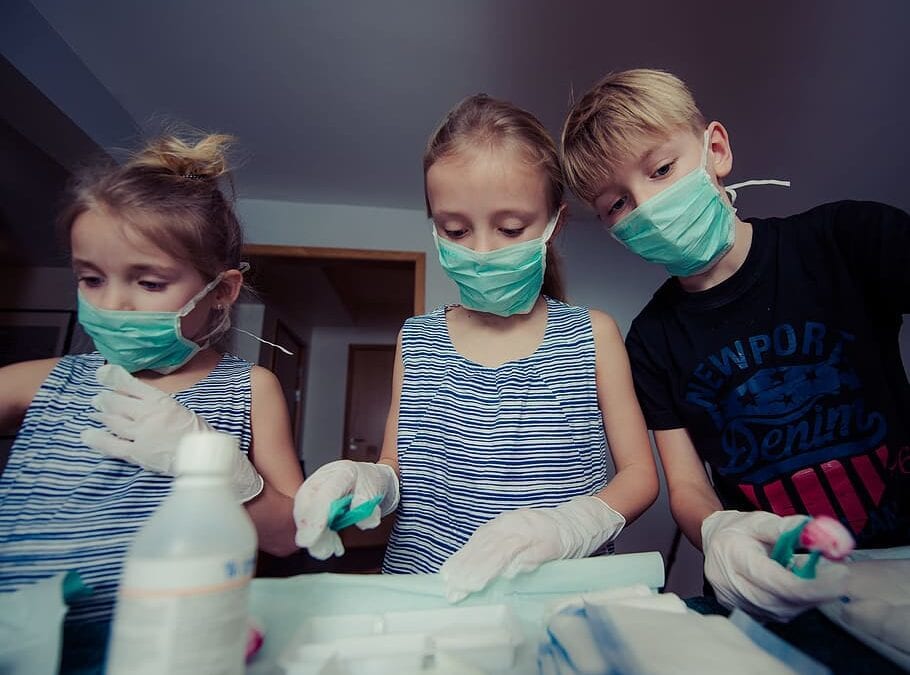
As we enter 2021, the world is unrecognisable compared to a year ago. Coronavirus has changed every aspect of life, including the act of saving life using first aid.
Social distancing, avoiding bodily contact and not risking inhaling other people’s breath are the orders of the day. Unfortunately, these directions don’t work well in first aid situations, which often involve being close to the casualty, touching and manipulating their body and even giving CPR.
Here are a few tips on how to adapt your first aid for Covid, based on information from our first aid courses and the Health and Safety Executive’s Coronavirus guidance.
1. Treating the casualty is still your first priority
Covid is taking priority almost everywhere, but saving the casualty is still more important, as long as you don’t definitely endanger anyone.
Do everything you safely can to minimise risks from the virus, but above all, aim for the 3Ps – preserve life, prevent worsening, promote recovery.
2. Do as much as you can from a distance
Do as much as you can from more than two meters away from the casualty and minimise the time you are within this area.
3. Have the casualty do as much as possible for themselves
If the casualty is conscious and able, have them do as much as safely possible for themselves; especially things requiring close proximity.
4. Carry out essential lifesaving actions up to and including CPR irrespective of the wider situation
As above, preserving life is still an essential priority.
5. When giving CPR, cover the casualty’s mouth and use other protective equipment.
Cover the casualty’s mouth with a breathing mask, thin cloth or towel. Wear your own mask too, as well as disposable gloves, eye protection and an apron if possible.
6. DO NOT provide rescue breaths
Don’t breathe into the casualty’s mouth under any circumstances. Only use chest compressions and an automated external defibrillator (AED) if available.
7. Find out if the casualty has Coronavirus symptoms and tell any paramedics or health professionals
If the casualty has Coronavirus, the approach to the incident is changed significantly. Even if a paramedic is not normally required, it is important to report such an incident to a health professional.
8. Clean up thoroughly as soon as possible
Discard disposable items, clean reusable ones and wash hands with soap and water or alcohol-based sanitiser as soon as possible after delivering first aid.
To get more information about our courses and how we can help with your training needs or to book a course, please email sally@sourcesolutionsuk.co.uk or call 01482 291499.


Recent Comments